Cracks, plaster and paint
Hairline cracks, blown or damaged plaster, and loose or flaking paint all show through wallpaper, and they can let it lift later. We point these out when we assess the wall. Some need only light preparation. Others need repair work, which is quoted separately or done by another trade first.
Old wallpaper and uneven surfaces
New paper should not go over old paper, because the old seams show through. Bumps, dents and ridges from earlier repairs show too, especially under raking light from a window. We note these and plan the preparation before we fix a price.
Real measurements
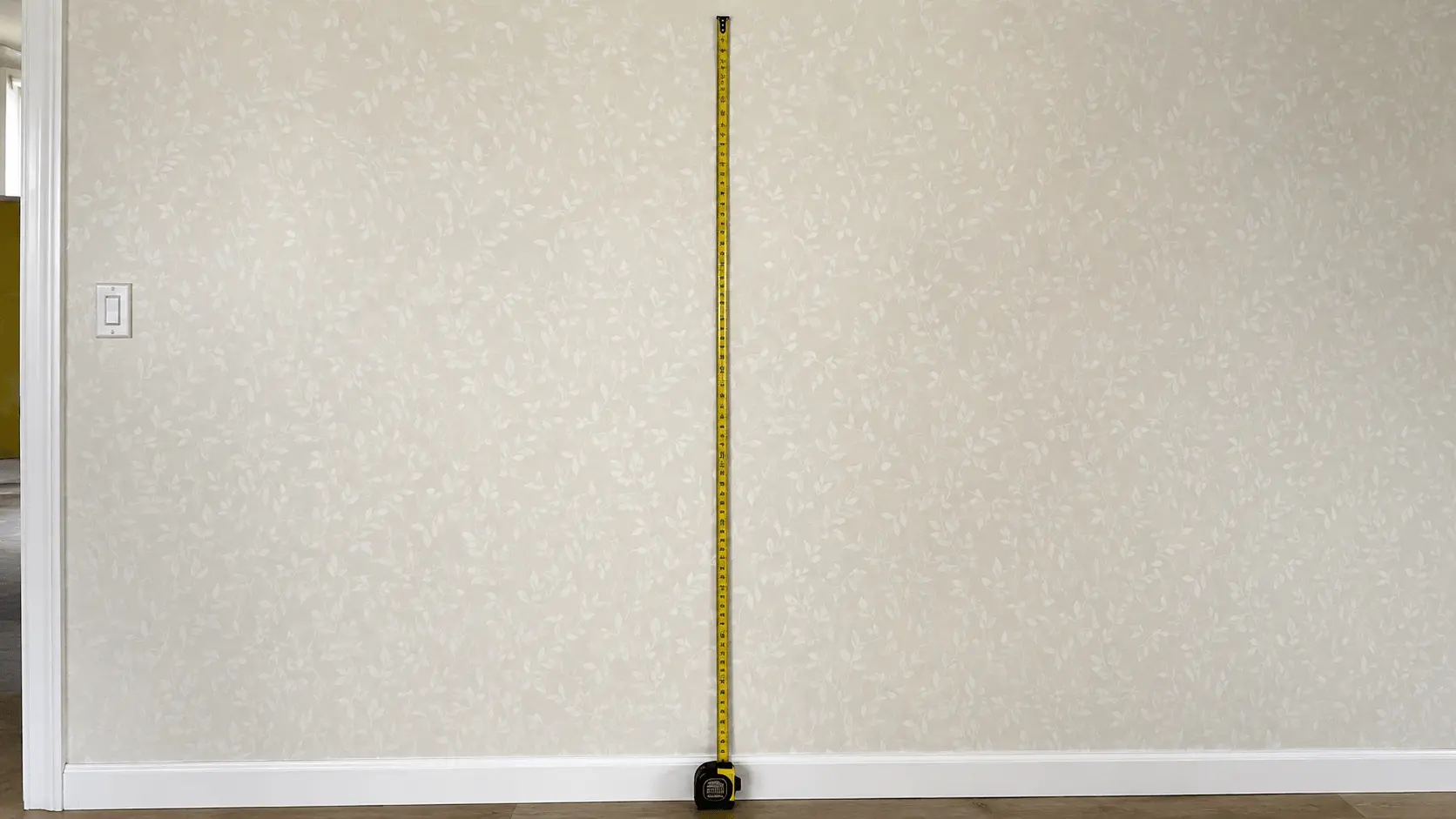
A rough width and height is enough for a first estimate. Custom wallpaper, though, is printed to the wall, and even an off-the-shelf job depends on the real height and on where the wall is out of square. That is why the site measure matters.
Corners and returns
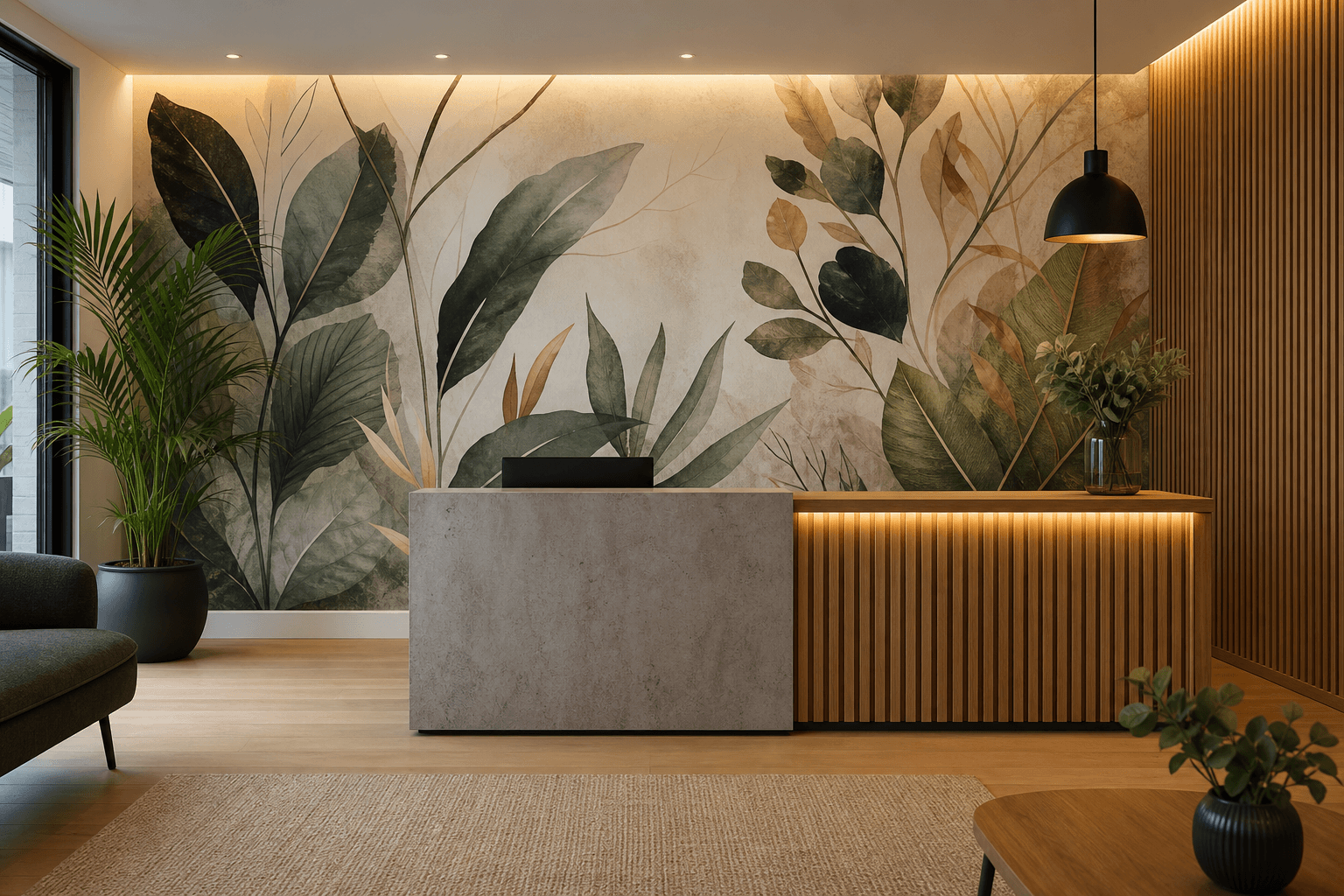
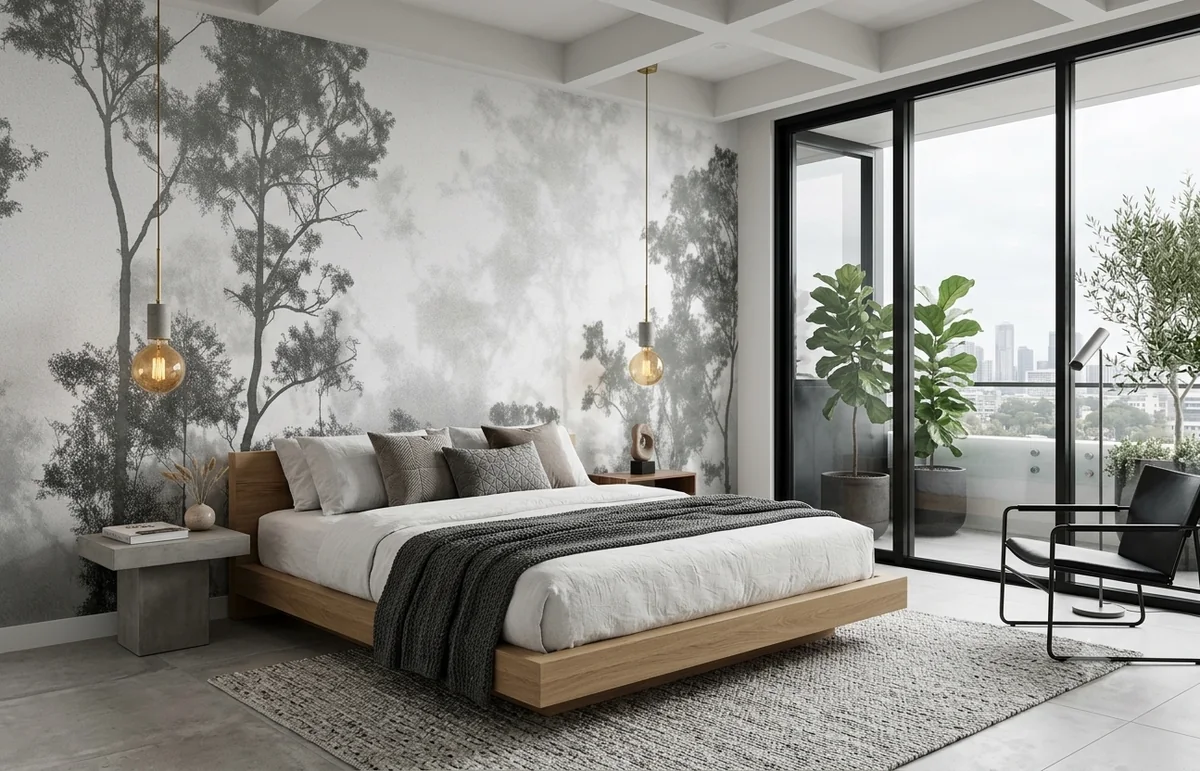
Walls are rarely perfectly straight, so a pattern that turns a corner can drift out of line. We set each wall out from a true vertical and plan where joins fall. On a mural, we decide beforehand whether the image wraps round the corner or stops at it.
Sockets and switches
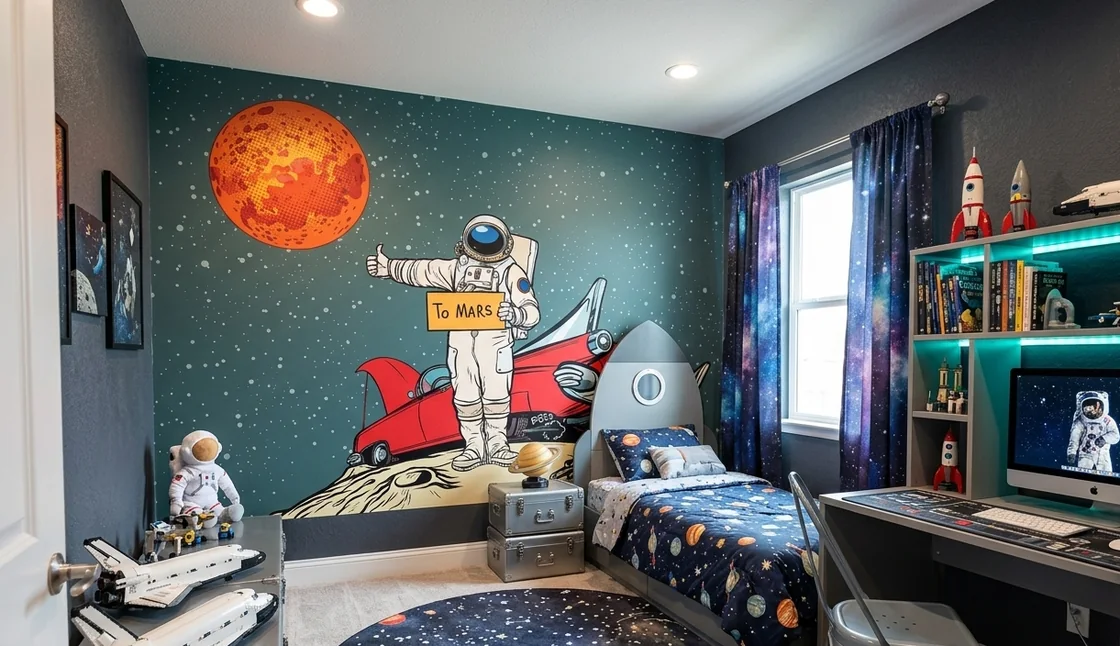
Plug points and light switches need neat cut-outs so the cover plates sit cleanly over the paper. We note where they are during the measure, so on a custom design they don't land on an important part of the image. Any electrical work, such as moving a socket, is a job for a qualified electrician, not the installer.
Cornices, ceilings and skirtings
The top and bottom edges are where people notice a poor job. When a ceiling line slopes or a cornice is uneven, we have to decide how to finish the edge, and a mural needs a margin planned for it so nothing important gets cut off.
The wallpaper itself
Vinyl, non-woven, paper-backed and self-adhesive wallpapers each need a different method and adhesive. If you are supplying the wallpaper, we check the product, the batch and the quantity before the job, because wallpaper bought in the wrong amount is a common reason for delays.
Moisture and room conditions
Damp walls, rising damp, leaks and poor ventilation have to be dealt with before any wallpaper goes up. Kitchens and bathrooms are sometimes suitable, depending on the room and the material, but not always, so we assess them case by case.