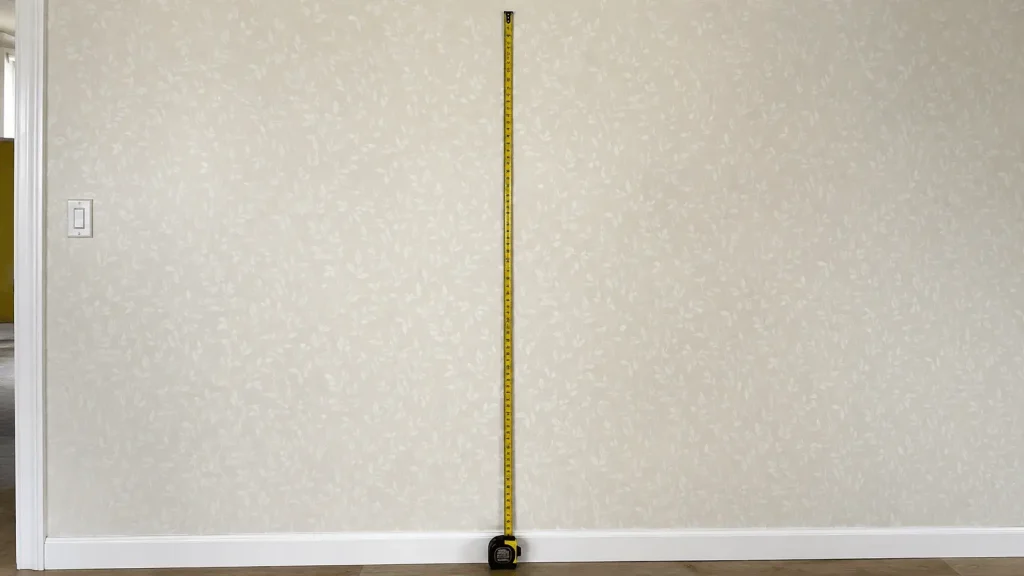
Choosing between wallpaper and paint for a feature wall comes down to the effect you want, your budget, the condition of the wall and how easily you want to change the look later.
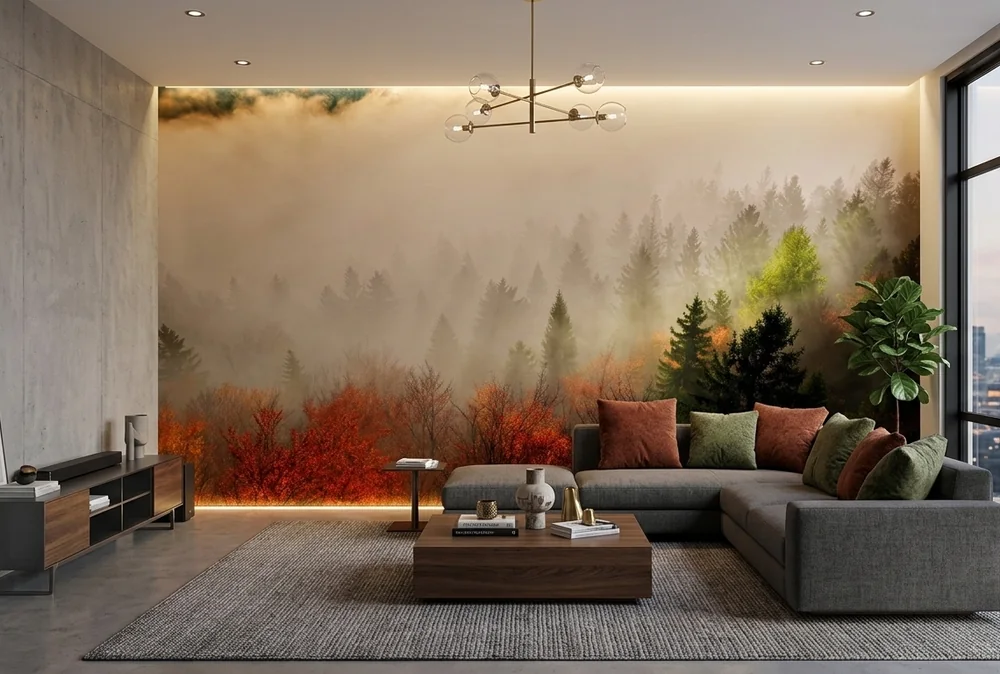
The short answer: paint is usually the simpler and lower-cost option, while wallpaper is better when you want pattern, artwork, texture or a feature wall that becomes the main visual focus of the room.
For many homes, the best solution is not wallpaper or paint. It is paint on the surrounding walls and wallpaper on one carefully selected feature wall.
At Signature Wall Coverings, we install custom and customer-supplied wallpaper in Midrand and surrounding Gauteng areas. This guide explains where each option works best and what to consider before you choose.
Wallpaper vs Paint at a Glance
| Factor | Wallpaper | Paint |
|---|---|---|
| Visual impact | Excellent for patterns, murals and statement designs | Excellent for colour and simple contrast |
| Customisation | Very high | High |
| Upfront cost | Usually higher | Usually lower |
| Installation | More precise and often better handled professionally | Easier for confident DIY projects |
| Wall preparation | Very important | Very important |
| Easy to change later | Requires removal or replacement | Relatively easy to repaint |
| Best use | Statement and feature walls | Simple feature walls and full rooms |
| Ability to display detailed artwork | Excellent | Limited without specialist painting |
| Pattern and visual texture | Excellent | More limited |
| Repair | Depends on wallpaper type and damage | Usually easier to touch up |
Our recommendation: choose wallpaper when the feature wall itself is meant to be the design. Choose paint when colour is the main feature and you want an easier, more flexible update.
What Is a Feature Wall?
A feature wall, sometimes called an accent wall, is one wall designed to attract more attention than the surrounding walls.
It can be created using:
- wallpaper or a custom mural
- contrasting paint
- wall mouldings
- timber or decorative panels
- stone or stone-look finishes
- artwork and other decorative treatments
The best feature wall is normally a wall that already has a reason to attract attention.
In a bedroom, this is often the wall behind the bed. In a lounge, it may be the wall behind the sofa or television. In an office, it could be the reception wall or a branded meeting-room wall.
Dulux South Africa similarly recommends choosing a wall that naturally draws the eye when someone enters the room and avoiding walls where doors and windows weaken the effect.
Is Wallpaper or Paint Better for a Feature Wall?
Wallpaper is generally the better choice when you want maximum visual impact. Paint is generally better when you want a simple colour change at a lower upfront cost.
The right answer depends on what the wall needs to achieve.
If your goal is to create a soft contrast between a neutral room and a dark green wall, paint may be all you need.
If you want a botanical mural, landscape, children’s illustration, stone effect, abstract artwork or another detailed design, wallpaper gives you far more creative freedom.
Signature Wall Coverings’ custom wallpaper can be produced to match the dimensions of the actual wall. Artwork and layout can therefore be prepared around the wall rather than forcing a standard design to fit the space.
1. Wallpaper Gives You More Design Freedom
This is the biggest difference between wallpaper and paint.
Paint gives you almost unlimited colour choice, but most painted feature walls still depend primarily on colour.
Wallpaper can introduce:
Pattern: florals, botanicals, geometric designs and repeating prints.
Artwork: abstract art, illustrations and custom graphics.
Scenery: forests, landscapes, city scenes and panoramic designs.
Texture effects: stone, concrete, marble, timber and other visual finishes.
Children’s designs: animals, space themes, maps and nursery artwork.
Personal imagery: suitable photographs or artwork can be turned into custom wallpaper when the image quality is high enough for large-format printing.
This means wallpaper can do more than change the colour of the wall. It can change the entire identity of the room.
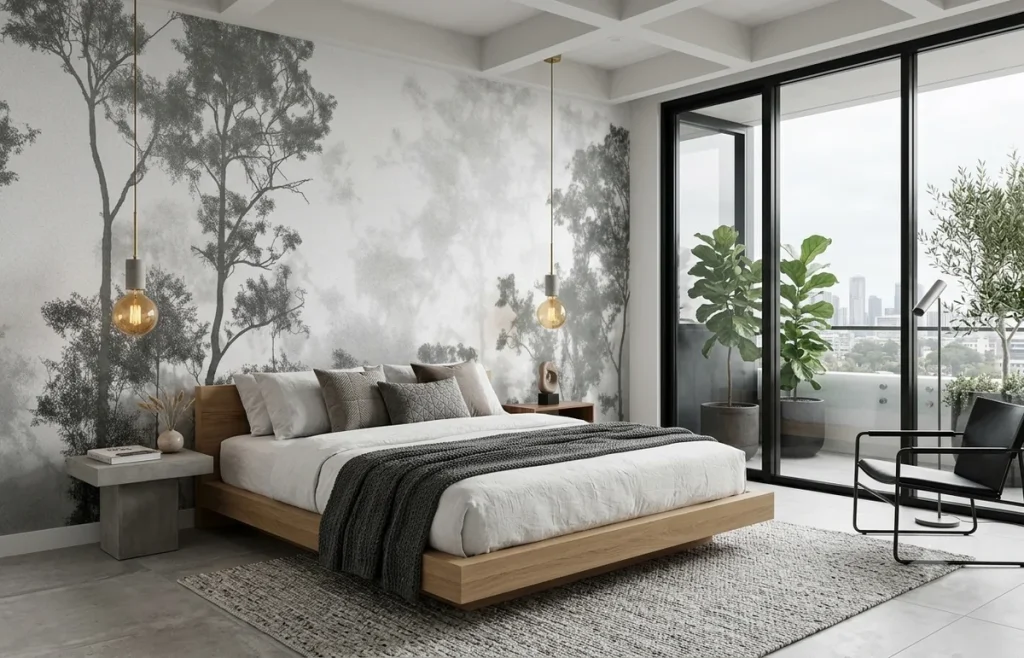
When wallpaper wins
Wallpaper is usually the stronger choice when someone entering the room should immediately notice the wall.
For example, imagine a neutral lounge with cream furniture and light flooring.
A darker painted wall can create contrast.
A floor-to-ceiling botanical mural can create an entirely new atmosphere.
That is the difference between adding a colour and creating a visual centrepiece.
2. Paint Is Easier When You Want a Simple Change
Paint has one major advantage: simplicity.
If you want to take a beige room and add one charcoal, blue, terracotta or green feature wall, paint can be a very effective solution.
It is also easier to repaint when your taste changes.
This makes paint especially useful if:
- you enjoy changing your interior regularly
- you are decorating a rental property
- you want to keep the project simple
- you only need colour rather than pattern
- you are comfortable painting the wall yourself
Paint does not have to be boring either.
Colour blocking, stripes and simple painted shapes can create strong feature walls. Dulux South Africa publishes examples of striped and geometric feature-wall techniques, showing how paint can create more than a single flat colour.
3. Which Is Cheaper: Wallpaper or Paint?
Paint is normally cheaper upfront for a simple feature wall. Custom wallpaper costs more because you are paying for both the wall covering and, where required, specialist production and installation.
However, comparing wallpaper and paint only by price per square metre misses an important point.
You are buying two different types of finish.
A painted feature wall gives you colour.
A custom wallpaper feature wall can give you a complete piece of wall-sized artwork.
At the time of publication, Signature Wall Coverings lists custom seamless wallpaper at R550 per square metre. Wallpaper installation is currently published separately at R160/m, with the applicable installation measurement confirmed when the project is measured and quoted.
The final wallpaper price can also be affected by wall preparation, access, removal of an existing finish and other project requirements.
A simple example
Imagine your feature wall measures:
3.5 m wide × 2.7 m high
The wall area is:
3.5 × 2.7 = 9.45 m²
Using Signature’s current R550/m² published custom wallpaper base rate:
9.45 m² × R550 = R5,197.50
That gives an estimated base wallpaper cost of about R5,198, before wallpaper installation and any project-specific requirements.
Signature’s online cost calculator uses this same example and makes clear that the estimate is a budgeting figure rather than a formal quotation.
Do not compare only the cheapest option
Ask what you want the wall to achieve.
If all you need is a new colour, paying for custom artwork probably makes little sense.
If you want a dramatic mural that becomes part of the room’s design, comparing it with one tin of plain paint is not a like-for-like comparison.
4. Which Option Lasts Longer?
There is no single lifespan that applies to every painted or wallpapered wall.
How long either finish lasts depends on:
- the wall condition
- preparation
- product quality
- installation or application
- sunlight
- moisture
- ventilation
- cleaning
- physical damage
- how the room is used
A well-installed wallpaper feature wall can remain attractive for years, but poor surface preparation can lead to problems regardless of how good the wallpaper itself is.
The same applies to paint.
Dulux advises that surfaces should be cleaned, prepared and allowed to dry properly before painting. Cracks and defects should be repaired, and existing loose or unsuitable finishes may need attention first.
At Signature Wall Coverings, we apply the same principle to wallpaper:
The wall matters as much as the wallpaper.
The surface is reviewed for conditions that could affect adhesion, alignment and the final appearance before installation.
5. Which Is Better for an Uneven Wall?
Neither wallpaper nor paint should be treated as a shortcut for a badly damaged wall.
Wallpaper can visually disguise some minor imperfections depending on the pattern and material, but it will not fix structural cracks, damp problems or badly damaged plaster.
Paint can also reveal surface defects, especially under strong lighting or when using certain finishes.
Before either option is installed, check for:
Cracks: Repair cracks properly rather than simply hiding them.
Loose paint: Remove unstable material.
Moisture: Identify the cause before covering the wall.
Uneven plaster: Prepare the surface where necessary.
Old wallpaper: Assess whether it needs to be removed.
Dust and contamination: Clean the surface before applying a new finish.
For wallpaper in particular, a smooth and properly prepared surface helps with alignment, adhesion and clean finishing.
6. Which Is Easier to Install?
For a straightforward feature wall, paint is usually easier for DIY installation.
Wallpaper demands more precision.
The installer has to consider:
- wall dimensions
- pattern or image positioning
- vertical alignment
- corners
- ceilings and skirting
- plug points
- switches
- adjoining walls
- trimming
- surface condition
With a custom mural, image placement also matters.
You do not want the main part of an artwork disappearing behind a headboard or being cut through by a plug point.
This is why Signature’s custom wallpaper process begins with measurement and artwork preparation before production.
The basic process is:
- Measure the wall. The actual dimensions and relevant wall details are recorded.
- Prepare and approve the design. Artwork is scaled and positioned according to the wall.
- Produce the wallpaper. The approved design is prepared for the project.
- Prepare and install. The surface is checked and the wallpaper is fitted to the actual space.
Accurate preparation matters because even an excellent print can look poor when alignment, edges or wall preparation are wrong.
7. Which Is Easier to Maintain?
Paint is generally easier to touch up.
If a painted wall gets marked or damaged, you may be able to repair and repaint the affected section, although colour differences can sometimes become visible as paint ages.
Wallpaper maintenance depends on the wallpaper material and type of damage.
Minor dirt may be cleanable where the material is designed to be wiped, while cuts, peeling, seam damage or physical impact can require a more involved repair.
The most practical question is therefore not simply, “Which is easier to clean?”
Ask:
How is this particular room used?
A quiet main bedroom feature wall faces very different conditions from a busy passage, children’s playroom or commercial reception area.
8. Wallpaper or Paint for a Bedroom Feature Wall?
Wallpaper is an excellent bedroom feature-wall option when you want the wall behind the bed to anchor the entire room. Paint is better when you prefer a simpler, calmer colour change.
Wallpaper works particularly well behind a bed because the wall is usually already a natural focal point.
Popular approaches include:
- soft botanical designs
- monochrome landscapes
- abstract artwork
- neutral textures
- darker murals
- subtle florals
A large pattern can reduce the need for multiple framed artworks above the bed because the wall itself provides the visual interest.
If your bedding, curtains and furniture already contain strong patterns, a painted feature wall may create better balance.
9. Wallpaper or Paint for a Lounge Feature Wall?
For a lounge, start by asking what already attracts attention.
If the sofa faces a television wall, that may be the natural feature wall.
If the sofa sits against a large uninterrupted wall, wallpaper behind it can create a strong backdrop.
Signature’s own project work includes botanical lounge wallpaper and other residential feature walls, which show how a mural can become part of the room rather than simply covering the surface.
Use wallpaper when the wall needs visual depth.
Use paint when furniture, lighting, artwork or architecture should remain the main focus.
10. What About Children’s Rooms and Nurseries?
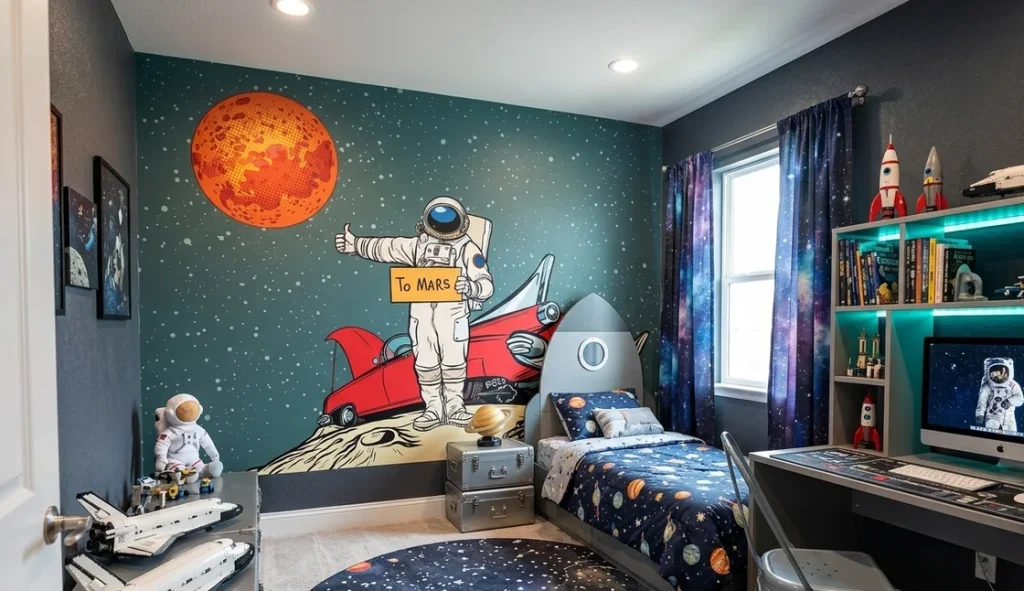
Custom wallpaper has a strong advantage in children’s spaces because the wall can become part of the theme.
Instead of simply painting the room blue, pink, green or beige, wallpaper can create:
- an animal scene
- a forest
- a world map
- a space theme
- soft nursery illustrations
- personalised artwork
Signature’s collection currently includes dedicated kids and nursery designs, and the company has completed children’s bedroom wallpaper projects.
One useful design principle is to think ahead.
A very age-specific design may need to change sooner, while nature, maps, abstract designs and softer themes can often remain suitable for longer.
11. Can You Combine Wallpaper and Paint?
Yes, and in many rooms this is the best option.
You do not have to choose wallpaper for every wall.
A very effective approach is:
Feature wall: wallpaper
Remaining walls: complementary paint
This gives the room a strong focal point without making every surface compete for attention.
For example, a green botanical wallpaper might be paired with a warm off-white on the remaining walls.
An abstract beige mural might work with soft stone paint.
A dark forest mural could sit alongside a lighter grey or neutral tone.
The wallpaper becomes the visual anchor, while the painted walls give the eye somewhere to rest.
12. When Should You Choose Paint?
Choose paint for your feature wall when:
- budget is the main concern
- you want a single solid colour
- you expect to change the room regularly
- the project needs to be simple
- you plan to do the work yourself
- the rest of the room already contains strong patterns
- you want easy colour changes in future
A painted feature wall can still look striking when the colour is chosen carefully.
13. When Should You Choose Wallpaper?
Choose wallpaper when:
- you want the wall to be the focal point
- you want a mural or large-scale artwork
- you want patterns that paint cannot easily reproduce
- you want a premium visual finish
- you are designing a bedroom, lounge, nursery, office or reception feature wall
- you want custom imagery
- you want the finish planned around the exact wall dimensions
For feature walls specifically, wallpaper has one clear advantage:
It allows one wall to carry the visual identity of the whole room.
Wallpaper vs Paint: Final Verdict
So, which is better for a feature wall?
Choose paint if you want a simple, affordable colour change that is easy to update.
Choose wallpaper if you want pattern, artwork, detail or a stronger visual statement.
For many interiors, the most balanced solution is a combination of both.
Paint the surrounding walls in a complementary colour and use wallpaper on the one wall you want people to notice first.
The most important decision is not simply wallpaper versus paint.
It is deciding what role the feature wall should play in the room.
If it only needs contrast, paint may be enough.
If it needs to become part of the design, wallpaper usually gives you more possibilities.
Planning a Wallpaper Feature Wall in Gauteng?
Signature Wall Coverings supplies and installs custom wallpaper for residential and commercial projects from its Midrand base, including projects across areas such as Sandton, Fourways, Centurion, Kempton Park, Randburg and Edenvale.
You can start in three ways:
- Use the wallpaper cost calculator to estimate the base wallpaper cost from your wall measurements.
- Browse the Signature Collection to find a design direction.
- Book a free site measure so the wall, dimensions and installation requirements can be assessed.
Already bought wallpaper somewhere else? Signature also offers installation for suitable customer-supplied wallpaper.
Ready to transform your feature wall? Price your wall online or send Signature Wall Coverings a photo and approximate measurements to discuss the next step.
Frequently Asked Questions
Is wallpaper better than paint for a feature wall?
Wallpaper is usually better when you want a strong design statement, pattern, mural or artwork. Paint is better when you simply want a different colour and an easier, lower-cost update.
Is wallpaper more expensive than paint?
Wallpaper usually costs more upfront than a simple painted feature wall. Signature Wall Coverings currently publishes custom seamless wallpaper at R550/m², with installation quoted separately at a published rate of R160/m according to the applicable installation measurement.
Can I use wallpaper on only one wall?
Yes. Wallpaper is particularly well suited to single feature walls. The remaining walls can be painted in a colour that complements the wallpaper.
Which wall should be the feature wall?
Choose the wall that naturally attracts attention when you enter the room. Common choices include the wall behind a bed, sofa, television, reception desk or another major focal point.
Does wallpaper need a smooth wall?
Wallpaper performs best on a properly prepared surface. Cracks, damaged plaster, loose paint, existing wallpaper and moisture problems should be assessed before installation.
Can wallpaper be installed over paint?
Often yes, provided the painted surface is suitable, stable and properly prepared. The actual wall condition should be checked before installation.
Can I use my own photograph for custom wallpaper?
Yes, if the image has enough quality and resolution for the required wall size. Signature Wall Coverings can review customer-supplied artwork before production and flag files that are unlikely to print cleanly at wall scale.
Can Signature install wallpaper that I already bought?
Yes. Customer-supplied wallpaper can be assessed for installation. You should provide details of the wallpaper together with a photograph and approximate measurements of the wall.
How much custom wallpaper do I need?
Measure the width and height of the wall in metres and multiply them to calculate the wall area in square metres. For example, a 3.5 m wide wall that is 2.7 m high has an area of 9.45 m². Final production measurements should still be confirmed for the actual project.
Is wallpaper suitable for bathrooms or kitchens?
Wallpaper may work in some bathrooms and kitchens, but moisture, ventilation, heat, wall condition and the selected material must be considered first. The specific wall should be assessed before confirming the finish.
About Signature Wall Coverings
Signature Wall Coverings is a Midrand-based interior wall-finishing company specialising in custom wallpaper, wallpaper installation, wall mouldings, window frosting and canvas printing.
The team has more than six years of experience and handles wall measurement, artwork preparation, surface assessment and installation for residential and commercial projects.
Signature Walls. Timeless Impressions.