Wall condition
Cracks, flaking or chalky paint, patched plaster and previous repairs all affect how wallpaper sits and stays put. Wallpaper follows the wall underneath it, so a ridge or a lifting edge reads through the finished surface rather than disappearing behind it. Anything we find is identified up front and quoted as preparation where it is needed.
Existing wallpaper
Hanging new paper over old is rarely a good idea: the seams underneath show, and old adhesive can lift once fresh paste goes on. Whether existing wallpaper strips cleanly depends on what is behind it, so it is assessed rather than assumed. Removal is not included in the installation rate.
Actual dimensions
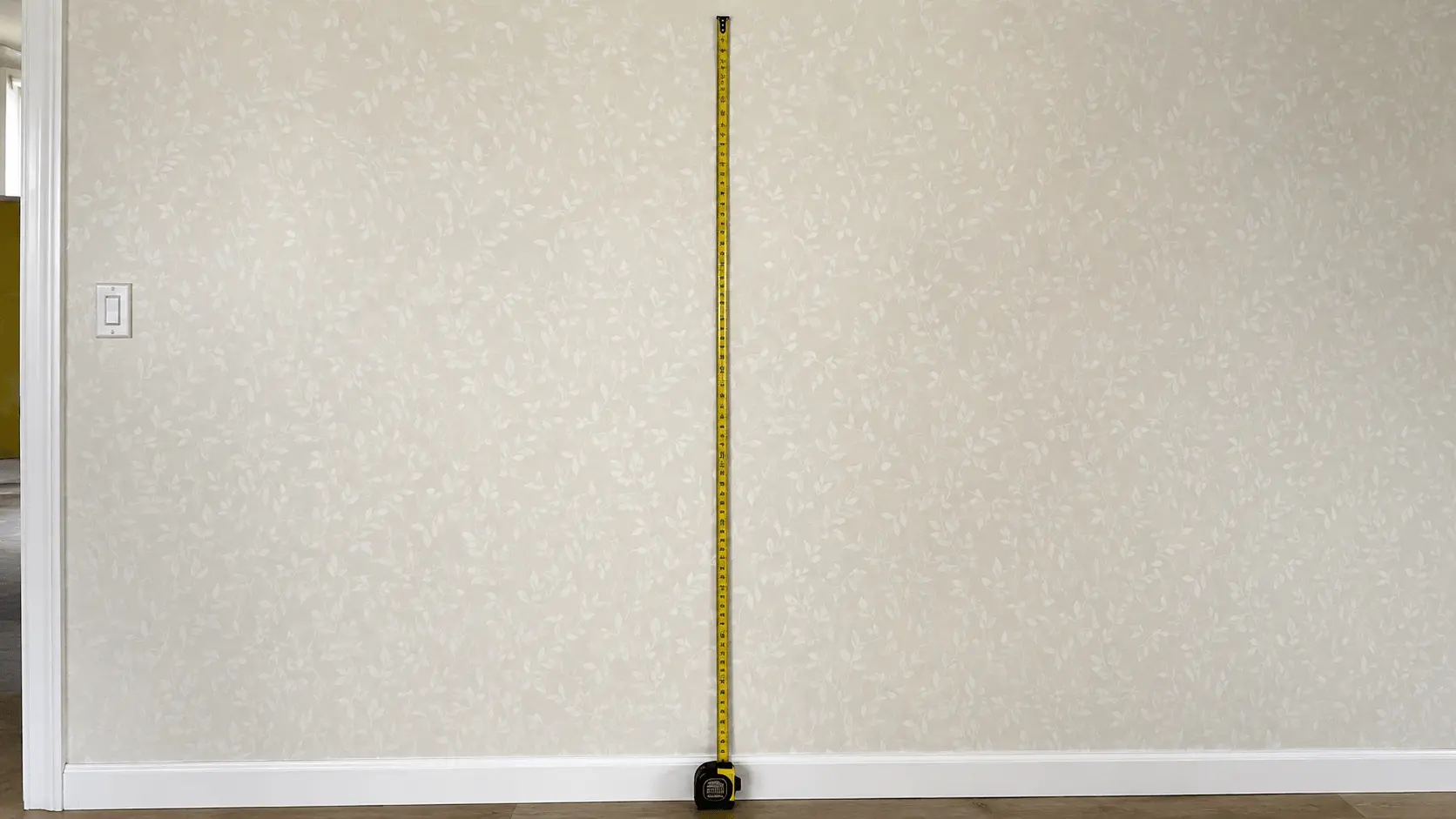
Rough measurements are fine for a first conversation, not for production. Walls are seldom square, ceiling heights drift across a room, and a bulkhead changes the usable height. Measuring properly is what lets custom wallpaper be printed to size and an installation-only job be quoted honestly.
Corners and returns
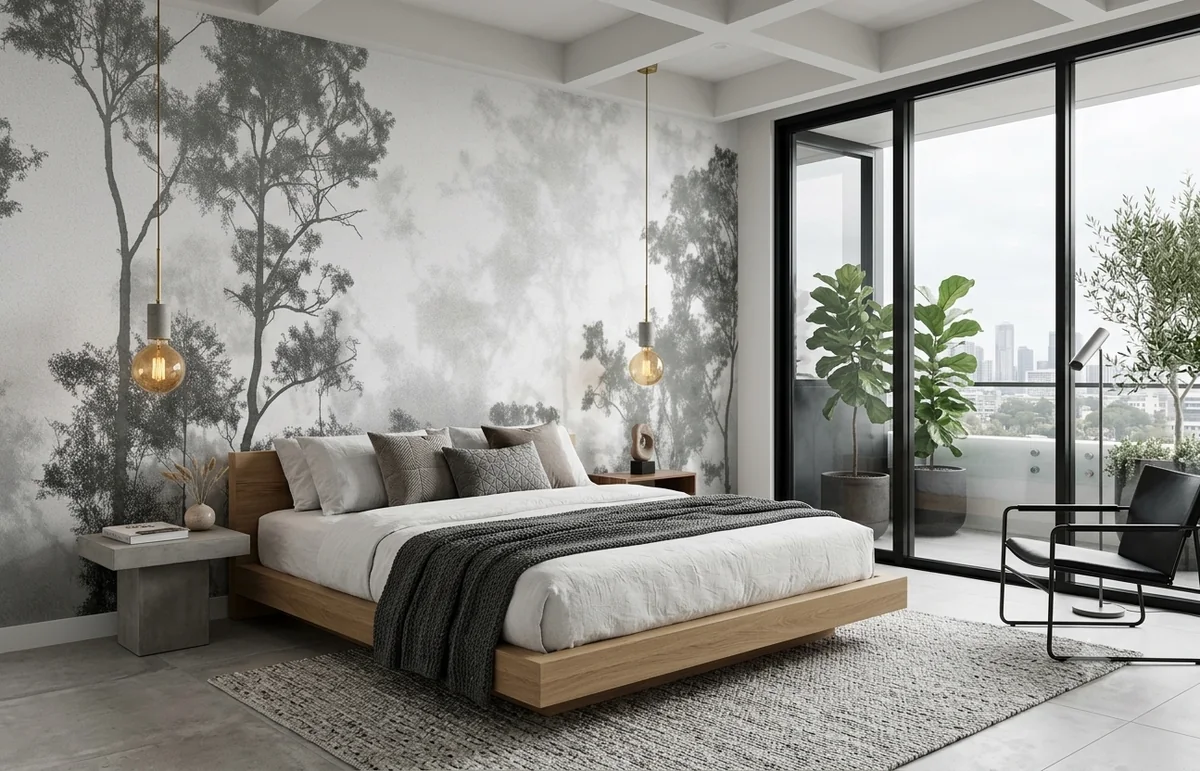
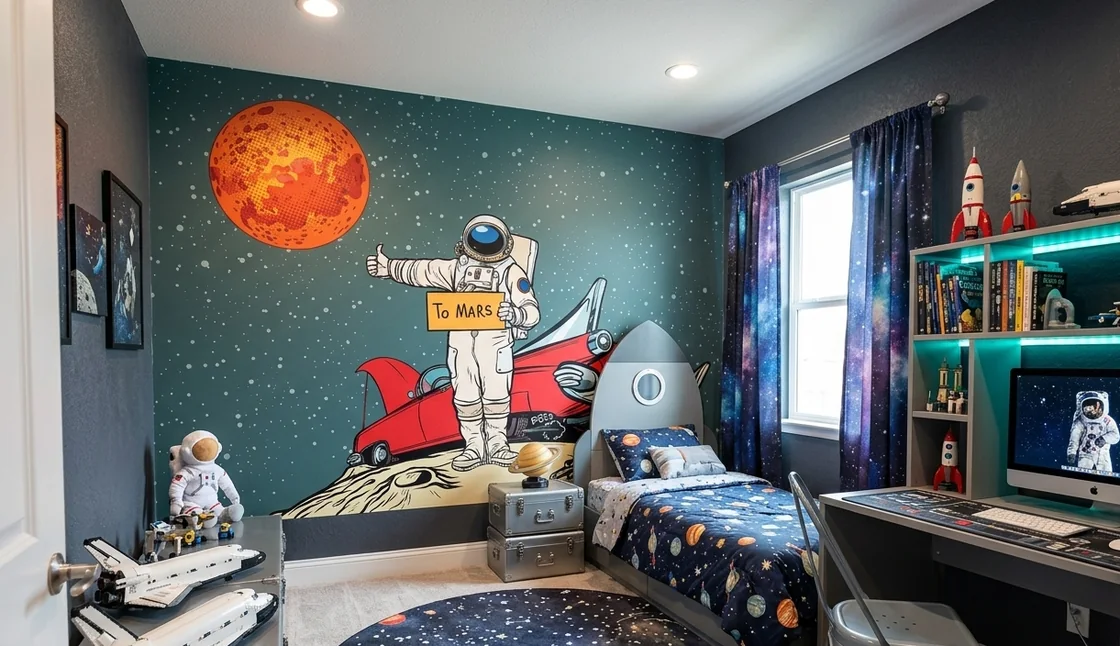
An internal corner, a window reveal or a short return wall interrupts the design. On a repeating pattern that means planning where the joins land. On a mural it matters more, because part of the image will turn the corner or stop at it, a decision best made on the drawing, not discovered on site.
Sockets, switches and fittings
Plug points, light switches, aircon units, TV brackets and cable trunking all have to be trimmed around. Where they sit is recorded at the measure so the cuts are planned, not improvised. On a custom design it also affects layout: nobody wants a switch plate in the middle of the one detail the wall was chosen for.
Ceiling, cornice and skirting lines
These are the edges people actually look at. A cornice that is not level, a skirting that steps, or a ceiling line that falls away all need the top and bottom trims handled deliberately. Getting them right is most of what separates a neat wall from an obviously amateur one.
The material itself
Paper-backed, vinyl, non-woven and self-adhesive products each want their own handling, and pattern repeat determines how much material a wall really needs. For customer-supplied wallpaper this is the first thing we check, because the quantity on hand does not always cover the wall once the repeat is accounted for.
Moisture and room conditions
Damp is the one issue worth resolving before spending anything: staining, a musty smell, bubbling paint or a wall backing onto a shower or a leak. Wallpaper will not hold on a wall that is still wet. Bathrooms and kitchens are not ruled out, but ventilation, splash zones and the material have to be assessed for that room.